
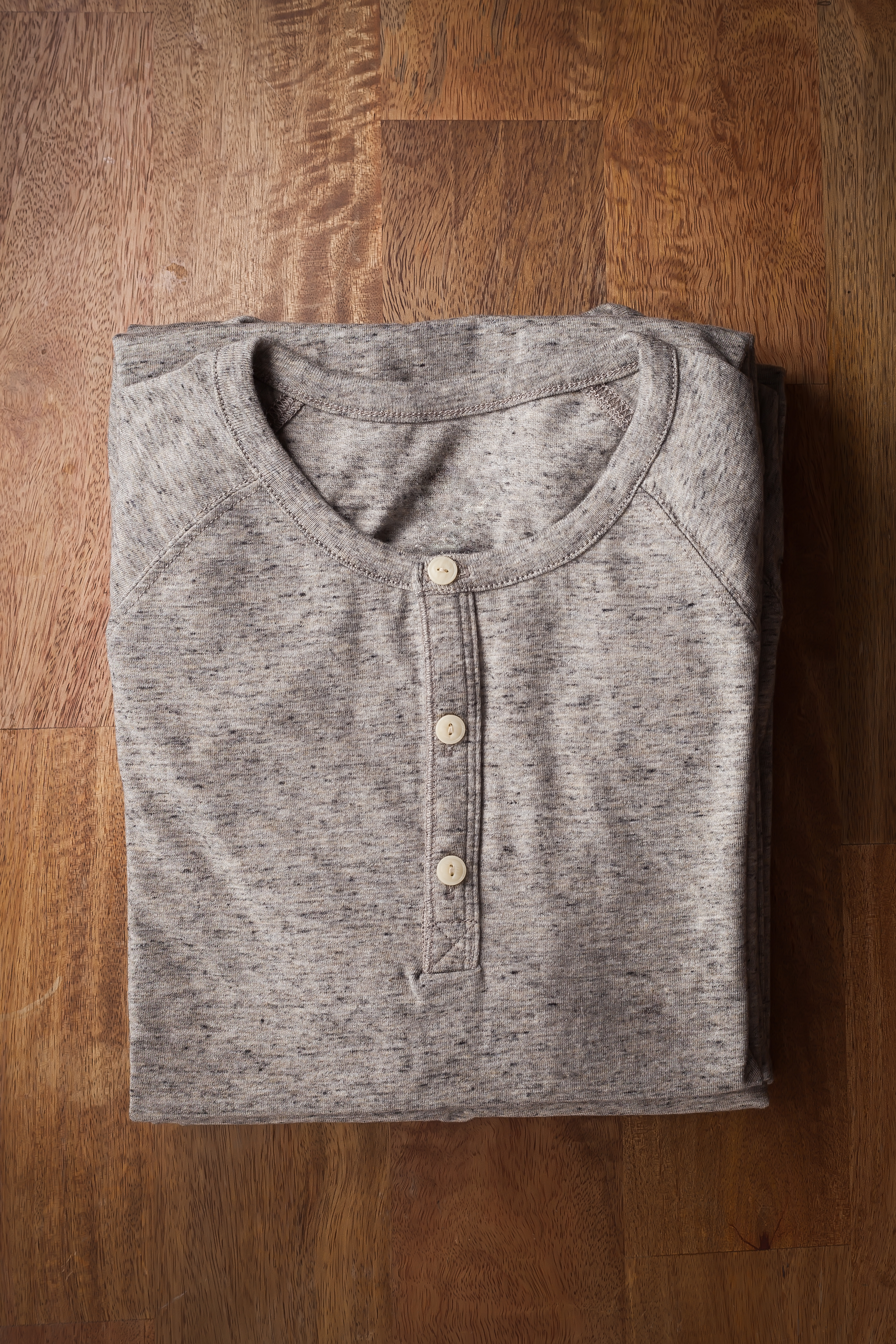
Caring for a Henley: The Placket Comes First
Caring for a Henley: The Placket Comes First
CARE GUIDE

The placket is the only part of a henley that can go wrong in the wash, so it gets the attention.
Most of a henley is a tee, and a tee asks for almost nothing. The placket is different. It carries buttons, buttonholes, a reinforced strip, and a neckband rib, and all four of them react to washing and drying in ways the rest of the shirt does not. Care for the placket and the rest of the shirt takes care of itself.
Button It Before It Goes In
A henley that goes into the machine open will come out with the placket twisted, the top edge rolled, and the buttonholes tugged into ovals by the agitation. Buttoning every button first keeps the strip flat, holds the two sides of the placket together so they stretch at the same rate, and protects the buttonholes from catching on anything else in the drum.
Buttons and Threads
Give each button a short tug when the shirt comes out of the dryer or off the line. Thread that has begun to loosen shows up as a button that rocks instead of sitting flat, and a loose button takes a minute to sew back on while a lost one means a mismatched replacement. The bar tack at each end of a buttonhole is worth a glance too. If a thread end is poking out, trim it rather than pulling it.
The Neckband Rib
The neckband is a rib knit, and rib loses its memory from heat before it loses it from washing. Hot dryer cycles are what turn a neck that hugged the collarbone into one that gapes. Dry a henley on low heat or on a flat surface, and if the neckband has gone slack, a brief steam while it is damp and a gentle push back into shape will recover some of it.
Drying So the Placket Lies Flat
A henley dried on a hanger stretches at the shoulders and lets the placket hang open under its own weight. Drying flat, buttoned, with the placket smoothed down the center, is what gives you a shirt that looks pressed without being pressed. If you must hang it, use a wide hanger and button the top two buttons so the neck holds its shape.
Long-Sleeve Cuffs
On a long-sleeve henley, the cuffs are rib knit like the neckband and respond the same way. Push the sleeves up by folding the cuff over itself rather than shoving the fabric up the forearm, which stretches the rib sideways. A cuff that has lost its grip can be revived with the same steam-and-reshape treatment, though not forever.
Cared for this way, a henley keeps its buttons and its neckline for years. If a question about a specific knit comes up, the Frequently Asked Questions page covers the practical side of ordering and keeping one, and our Return & Refund Policy explains how we handle a shirt that arrives with a fault.
Thank you for shopping with us, and for keeping a good henley within reach.